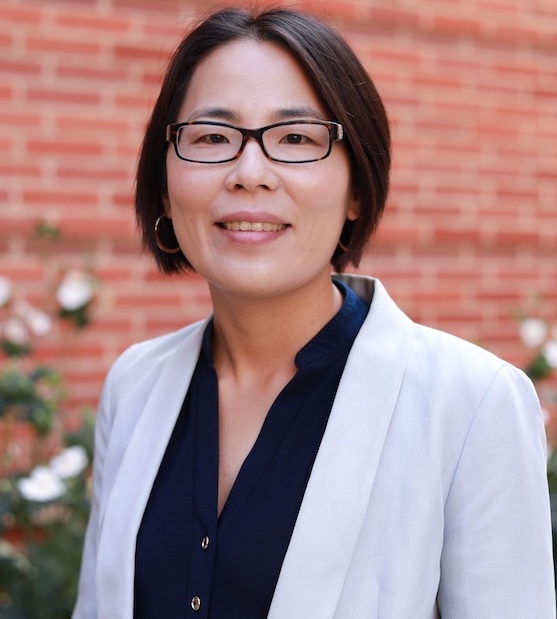
Organizers
The workshop is coordinated by an international team with extensive experience organizing, chairing, and hosting major conferences and workshops.
ACM FSE 2026 Workshop
July, 5th 2026
A one-day gathering for researchers and practitioners shaping trustworthy, AI-enabled, data-intensive software engineering.
Registration Desk:
FSE 2026 Registration Desks
Hours: 8:00 AM – 5:30 PM, July 5–9, 2026
Location: Atrium of the John Molson Building (MB), 1600 Blvd. De Maisonneuve Ouest, Montreal, Quebec H3H 0A1
The DISE Workshop will be held in MB 3.270, starting at 8:45 AM. See the full program.
Important Dates (AoE, UTC-12h)
Modern software systems are becoming increasingly data-intensive. They process massive quantities of data and also produce large-scale, machine-generated data, such as traces and telemetry, which is used for AI training, runtime monitoring, log analysis, debugging, and testing. These analytical pipelines are integral to today's AI advancements and are performance-critical, and their behavior is highly dependent on the scale and content of the data they process.
To thrive at this scale, software organizations need intelligent AI agents that can not only process the data but also reason about it within the context of the software. Integrating AI-driven, data-informed feedback loops is essential for autonomous software operations and context-aware guidance to developers. Achieving trustworthy AI-native software engineering demands addressing challenges that directly influence the robustness, reliability, and trustworthiness of data-intensive systems.
Trustworthy AI-enabled software engineering faces several reinforcing challenges in data-intensive environments:
We invite discussions that explore fundamental ideas, practical solutions, and cross-domain innovations, including but not limited to:
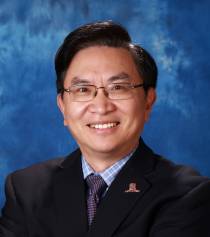
Dr. Dongmei Zhang
Distinguished Scientist and Deputy Managing Director, Microsoft Research Asia
Short Papers
Poster
What are the research challenges in this space that we as a community should be working on?
Panelists: Lionel Briand, Michael Lyu, Dongmei Zhang, Chao Peng
Moderator: Miryung Kim
Participants divide into focused breakout rooms organized around themes distilled from the morning program, exploring shared challenges, synergies, and actionable ideas.
Each breakout group shares key takeaways for collective reflection.
Chao Peng
Principal Research Scientist, ByteDance; Program Co-Chair, AIware
Participants identify where they would like to continue their discussions.
Participants divide into focused groups continuing to explore shared challenges and actionable ideas with an eye toward a community-driven article.
Panelists and breakout group leads reconvene to share outcomes and consolidate key insights.
Groups contribute to a shared writing template covering challenges in data-intensive software engineering, the current landscape, and a roadmap for future research directions.
Anticipated working groups emphasize sustained collaboration and tangible outputs:
Design and maintain realistic benchmarks, bug corpora, and domain-specific oracles that capture the diversity of contemporary data stacks.
Reinvent observability for heterogeneous, AI-augmented systems spanning telemetry pipelines, instrumentation, and fine-grained failure attribution.
Address reproduction challenges, isolate root causes, and improve coverage in data-rich environments with emergent behaviors.
Ensure security, privacy, scalability, and resilience across shifting workloads and operating conditions.
Understand and standardize how AI agents consume and generate telemetry, including decision logs and monitoring strategies.
Understand and standardize how data-intensive software evolves for AI training and inference needs at scale
We welcome multiple submission types that reflect the maturity and goals of your contribution:
Up to 2 pages, including references highlighting early-stage ideas, industrial perspectives, or proposals that feed into the community report.
Up to 4 pages, plus 1 additional page for references presenting early visions, experience notes, or framework sketches that invite feedback.
Up to 10 pages, plus 2 additional pages for references documenting novel approaches, frameworks, or evaluations grounded in data-intensive software engineering.
Recent preprints offered for open discussion in a non-archival format to spark collaboration.
Important Dates (AoE, UTC-12h)
Submission notes: Submissions must adhere to the FSE 2026 two-column industry track format. Detailed formatting guidelines can be found at the FSE 2026 – How to Submit. Submissions will undergo a double-blind review process by the program committee members. Submissions must be original at the time of submission and must be uploaded via HotCRP. At least one author of each accepted paper must register and present at the workshop.
All accepted papers, except for position statements and arXiv presentations, will appear in the FSE 2026 workshop proceedings by default. Non-archival papers and position statements will be shared via the workshop website. Regardless of track, submissions must be unpublished elsewhere, and at least one author must attend and present.
Authors of accepted position statements will collaborate after the workshop to synthesize a community article—targeting venues such as IEEE Software— that captures shared insights and future directions. We are also planning to award a spotlight award for the best emerging ideas on data intensive software engineering.
The workshop is coordinated by an international team with extensive experience organizing, chairing, and hosting major conferences and workshops.